
LingoLooper: AI Language Game
Lumi Labs ABEducational
4.9125.00 Reviews
- Version
- 0.23.0
- Installs
- 500.00K
- Age Rating
- Everyone
Screenshots
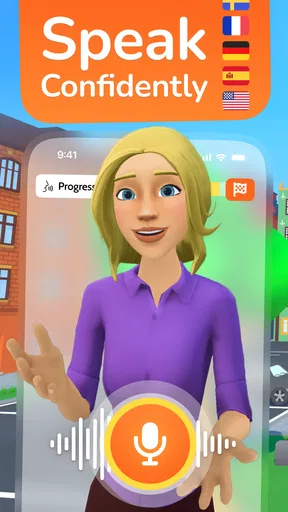
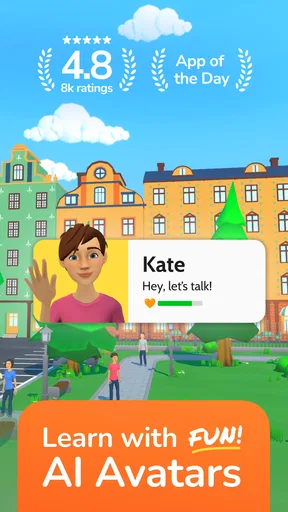
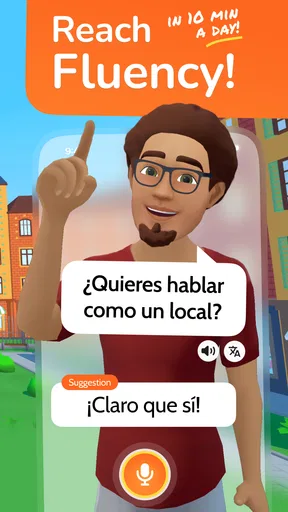
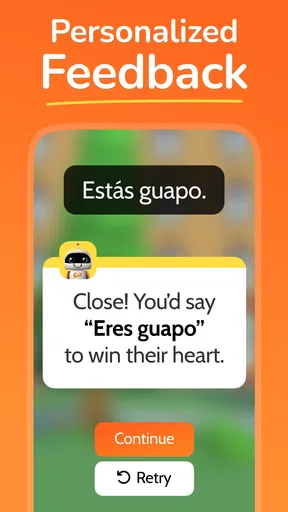

Our Review of LingoLooper: AI Language Game
 Analysis by Appyee
Ever found yourself wishing you could learn a new language without the usual grind and monotony? Well, let me introduce you to LingoLooper: AI Language Game. This little gem might just revolutionize the way you approach language learning. I decided to give it a whirl, and here's how it went down.
The first-week appeal
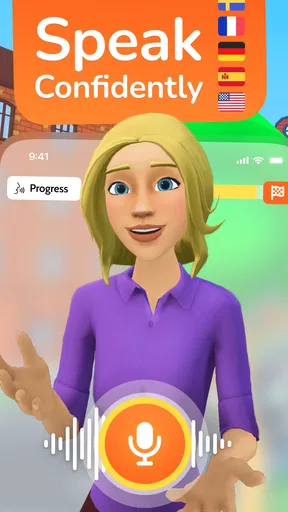
My early impression is that the game format can make it easier to begin than a workbook or a lesson built around memorizing lists. The appeal is not simply that practice feels playful: speaking to an AI character gives a learner a reason to try forming a thought, even when the sentence is imperfect. That makes it a useful low-pressure starting point for someone who tends to postpone speaking until they feel “ready.”
A practical way to test whether it suits you is to treat the first few sessions as a trial of the learning style, not a test of your language ability. Notice whether you are willing to answer aloud or compose replies, and whether the conversation gives you enough context to understand what to try next. If you enjoy that back-and-forth, the format may help you return; if you mainly want clear explanations of grammar rules, a structured course may be a better first choice.
Getting Started with LingoLooper
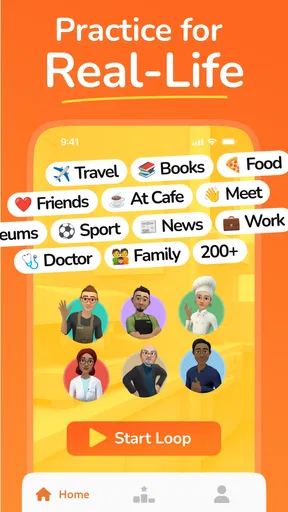
First things first, downloading LingoLooper: AI Language Game is a breeze. Available on both Android and iOS, it's just a quick tap away. Once installed, you’re welcomed with a vibrant interface that feels more like a game than a traditional learning app. No boring drills here! Instead, think of it as a fun, immersive experience where you pick up a language almost by accident.
Interactive Features
Upon diving in, the app presents you with a slew of interactive features. The main attraction is its AI-driven gameplay, which adapts to your learning pace. The app's ability to cater to your current level of understanding is impressive. Whether you're a complete newbie or just brushing up, it feels like having a personal tutor who gets you.
The game mechanics are engaging, featuring challenges that range from vocabulary quizzes to real-life conversation simulations. It’s almost like playing a role-playing game, but instead of saving kingdoms, you’re conquering a new language. How cool is that?
Turning a quick session into useful practice
The conversational format is most useful when I approach it with a small, specific goal. Before starting, I might choose one ordinary situation—introducing myself, asking for something, or making simple plans—and try to stay with that topic rather than jumping between unrelated ideas. This gives a short session a practical shape and makes it easier to remember what I struggled to say.
For a realistic routine, imagine having a few spare minutes while waiting for a meal or settling in after work. I would use that time for one focused exchange, then take note of a phrase I hesitated over and try using it again later without looking. The value is not that a brief game replaces a lesson; it is that a small speaking attempt can fit into a day when a full study session would not happen.
One useful trade-off to keep in mind is that conversational practice and explanation are different jobs. An AI character can keep an exchange moving, but a learner who needs to understand why a particular verb form changes may still benefit from a grammar reference or teacher. I would pair the game with a notebook or a separate reference rather than expecting every uncertainty to be resolved inside the conversation.
Why It Works
Now, what really sets LingoLooper apart is its use of AI to personalize the learning experience. The app tracks your progress and adjusts the difficulty of tasks accordingly. It’s like having a smart friend who knows exactly when to push you a little harder and when to ease off.
The game rewards you with points and badges for completing levels, and these small incentives really do wonders in keeping you motivated. The sense of achievement after nailing a tricky conversation is genuinely rewarding. Plus, the leaderboard feature adds a splash of competition, letting you see how you stack up against other learners worldwide.
Month-to-month value and familiar alternatives
The first burst of novelty is not the same as lasting value. I would judge the game over several weeks by whether I keep returning to speak, not by how much time I spend collecting rewards. If the challenges continue to meet me at a useful level and the interactions give me fresh reasons to produce language, it can earn a place in a regular routine. If I start tapping through only to maintain a streak or chase points, the learning benefit is probably thinning out.
Compared with flashcard apps, this approach asks more of you: instead of recognizing a word from a list, you have to retrieve language in a conversational context. That can be better for building confidence with replies, while flashcards are often more efficient for drilling a set of words or reviewing a specific vocabulary list. Compared with a conventional course, the game is less naturally suited to a carefully sequenced explanation of grammar. I see it as a speaking-practice companion rather than a complete replacement for every kind of study.
That distinction also helps answer who is likely to enjoy it. A learner who already knows a little Spanish and wants a less intimidating way to practise forming responses may find the format especially appealing. Someone starting from scratch can still explore it, but should be comfortable learning through interaction and supplementing it when a concept needs a more explicit explanation. A person who wants a textbook-style syllabus, detailed correction, or quiet, offline revision may be happier with another tool for those tasks.
The Social Side
One of my favorite parts about LingoLooper is its community aspect. You can join groups, participate in language challenges, and even chat with native speakers. It's a fantastic way to practice real-world conversations without the pressure of face-to-face interactions.
There’s also a forum where users share tips and tricks. It’s like having a supportive group of language learning buddies at your fingertips. The social element not only enhances learning but also keeps things lively and interactive.
Keeping the habit without turning it into a chore
For month-to-month use, I would keep the routine modest and purposeful: return when I have enough attention to take part in a conversation, and occasionally revisit the kinds of exchanges that expose a gap. That is more sustainable than making every session a long study block. If the app’s game incentives help me open it, fine; I would still measure progress by whether I can express a little more than I could before.
The social options can add variety, but they are not essential to every learner’s routine. If group activity or a leaderboard motivates you, they may make practice feel less solitary. If comparing progress distracts you, there is no need to make competition the point. I would focus on the interaction that helps me practise, and treat community features as an optional extra rather than a requirement for learning.
Design and Usability
The app’s design is sleek and intuitive. Navigating through the app is straightforward, and the vibrant graphics make for a visually appealing experience. The developers have done an excellent job keeping things simple yet engaging, which is crucial for an educational app.
The app runs smoothly without any hitches, and the quick load times mean you're never left hanging. Whether you’re on a quick coffee break or have a dedicated study session, LingoLooper is ready to roll at a moment’s notice.
Maintenance, fatigue, and practical fit
Maintaining a language habit still takes effort, even when the activity is presented as a game. I would not rely on a run of quick sessions alone to build broad fluency: conversational practice needs to sit alongside listening, reading, and review if those are part of your goals. A simple way to make the time count is to choose one phrase or recurring difficulty after a session and bring it into a later practice, rather than treating every conversation as a fresh start.
There are also reasons the format might lose its shine. Repeated game rewards can become background noise, and an AI conversation may feel less satisfying than speaking with a person when you want natural spontaneity or human feedback. If I notice that I am answering mechanically, I would switch the topic, take a short break, or use a different study method instead of forcing a session just to keep a routine intact.
Cost is another sensible part of deciding whether to keep using it. The game is free to start, with in-app purchases ranging from $5.99 to $99.99 per item, so I would explore the free experience first and only consider paying if I knew which part of my practice I wanted to support. It is made by Lumi Labs AB, has an Everyone age rating, and is listed with a 4.7 average from around 5.4 thousand ratings. Those figures suggest it has found an audience, but they cannot tell you whether its conversational style matches your own preferences.
Final Thoughts
So, is LingoLooper: AI Language Game worth a download? Absolutely! It's a refreshing take on language learning, combining the best of gaming with educational value. Whether you're serious about picking up a new language or just want a fun way to pass the time, this app delivers on all fronts.
With its adaptive AI, engaging gameplay, and vibrant community, LingoLooper makes learning fun and effective. So why not give it a try? You might just find yourself looking forward to your daily language lessons.
My long-term verdict
I would give it a fair chance if the idea of practising through AI-led conversation sounds more inviting than another stack of vocabulary cards. The game is free, it is an educational title from Lumi Labs AB, and it has reached over 100 thousand installs. It was released on February 9, 2024; version 0.18.3 requires Android 8.0 or later. It supports learning Spanish and more than 20 other languages, which gives curious learners room to explore beyond one first choice.
My recommendation is conditional rather than universal: use it when you want approachable, interactive speaking practice, and keep another resource close for systematic explanations or review. If the conversation format keeps you coming back after the first-week excitement fades, that recurring willingness to practise is a real strength. If it becomes another app you open only for its rewards, or you need a more structured path, choosing a course, tutor, or focused vocabulary tool instead is a sensible decision.
Privacy and Permissions
See what permissions an app requests and how it handles your data.
- Photos/Media/Files
- read the contents of your USB storage, modify or delete the contents of your USB storage
- Storage
- read the contents of your USB storage, modify or delete the contents of your USB storage
- Microphone
- record audio
- Other
- view network connections, pair with Bluetooth devices, full network access, change your audio settings, run at startup, control vibration, prevent device from sleeping
Verdict
Strengths of LingoLooper: AI Language Game
- Engaging AI-driven language games.
- Adaptive difficulty for all skill levels.
- Supports multiple languages.
- Interactive and user-friendly interface.
- Regular updates with new content.
Limitations of LingoLooper: AI Language Game
- Limited offline functionality.
- In-app purchases can be pricey.
- Occasional AI response delays.
- Requires stable internet connection.
- Some languages lack full support.
Similar Picks in This Category
View All
Little Panda Policeman
BabyBus4.0

Monster Trucks Game for Kids 2
Raz Games4.1

Little Panda's Chinese Recipes
BabyBus4.4

Little Panda's Restaurant
BabyBus4.4

Little Panda's Ice Cream Games
BabyBus4.3

Baby Panda Care
BabyBus3.8
Frequently Asked Questions
What is LingoLooper: AI Language Game?
LingoLooper: AI Language Game is an interactive app designed to enhance your language skills through engaging gameplay. By leveraging AI technology, the app offers personalized challenges tailored to your learning pace. It supports multiple languages, making it an ideal tool for both beginners and advanced learners seeking a dynamic way to practice.
How does the AI technology work in LingoLooper?
The AI technology in LingoLooper analyzes your performance in real-time, adapting the difficulty of tasks based on your strengths and weaknesses. This personalized approach ensures that you're consistently challenged without feeling overwhelmed, fostering a more effective and enjoyable learning experience. The AI also tracks progress to suggest areas for improvement.
Is LingoLooper suitable for all age groups?
Yes, LingoLooper is designed to be user-friendly and accessible to various age groups. It features different difficulty levels and game modes that cater to both children and adults. The app's interface is intuitive, making it easy for users of all ages to navigate and engage with the language learning content.
Does LingoLooper offer offline gameplay?
LingoLooper provides offline gameplay options, allowing users to continue learning without needing an internet connection. However, some features, like real-time AI feedback and updates, require connectivity. This makes it convenient for users to practice on-the-go, ensuring continual progress in language acquisition.
Are there in-app purchases or subscriptions required?
LingoLooper offers a freemium model, providing basic features at no cost. However, premium content and advanced features are available through in-app purchases or subscription plans. These options typically offer ad-free experiences, additional languages, and enhanced learning modules for users seeking more comprehensive language training.
Play our best games!


